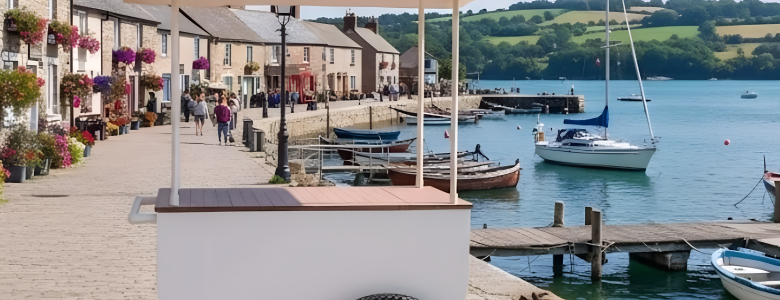
Street Trading Licence Guide (UK) — for ice-cream cargo bike operators
If you buy one of our gorgeous ice-cream cargo bikes and want to park up and sell scoops, cones or tubs on the street, you’ll need to understand the patchwork of street-trading rules across the UK. This plain-English Street Trading Licence Guide For Ice Cream Bikes guide (written with ice cream bike venders in mind) explains the common licence types, the public vs private land rules, vehicle and food requirements, and how to deal with your local council so you can focus on serving smiles — not fines.
Do I need a street-trading licence?
Short answer: often, yes — but it depends where you trade and how. In England & Wales most councils require a street-trading licence (sometimes called “consent”) to sell goods from a barrow, cart, trailer or vehicle on a public street. Councils use these licences to control hygiene, traffic, litter, noise and public safety.
Legally, the Local Government (Miscellaneous Provisions) Act 1982 gives councils the power to require consents or licences for street trading — which is why exact rules and application forms differ by council.
Licence types you’ll meet
Different councils use slightly different names, but these are the common types you should know:
Temporary / casual licences (one-day or short-term) — for events, markets or trial trading. Good for testing a pitch. Many councils offer a one-day or short-term consent.
Annual / permanent street-trading licence (site specific) — if you trade regularly from the same spot you’ll usually need an annual consent. Some councils operate waiting lists or priority systems for permanent pitches.
Pavement licence — separate from a street-trading consent, this is for placing removable furniture (tables/chairs/serving areas) outside premises and is often used by cafés and some mobile vendors; check both licences if you plan seating.
Market pitch permit — for trading inside a licensed market (market-specific rules apply). Markets are often a simpler route for new traders.
Note: names vary across England, Wales, Scotland and Northern Ireland — always check the specific council’s webpages for the exact forms and fees.
Public land vs private land — what’s the difference?
This is a crucial point for cargo-bike operators:
Public land / highway / pavement: Trading on roads, pavements or other public highways almost always requires a street-trading consent from the local council. Some councils explicitly say trading within a certain distance of the highway (commonly 7 metres) from private land can still need consent. In practice, if you’re visible from the road/pavement you’ll usually need permission.
Private land: With the landowner’s permission you may be able to trade without a street-trading licence — but caveats apply. If the private site is very close to the public highway, or you intend to trade there regularly (more than a few days a year), planning permission or registration (especially for food) may still be needed. Always get written permission from the landowner and check planning rules.
Practical tip: if you’re offered a private location (outside a shop, community venue, or private event), get the landowner to confirm in writing they permit trading and check with the council anyway — it avoids a surprise enforcement visit.
Vehicles, food safety and other conditions
If you’re selling food from an ice-cream bike you’ll commonly be asked for:
Food hygiene registration with the local authority (you must register with the council at least 28 days before trading). Expect inspections and to follow food safety regulations.
Public liability insurance, waste/litter management plans, and compliance with trading standards (weights/packaging/measurements).
Councils can attach licence conditions: where you can park, trading hours, quiet hours, no obstruction and litter collection Read the licence conditions carefully.
How to deal with your local council (step-by-step)
Find the right council: Use your trading postcode (or the council responsible for the street you want) and read their street-trading pages and application form.
Ask early and get pre-application advice: Many councils expect you to get pre-consent from a licensing officer before the full application. Some councils won’t accept an application without that pre-consent.
Prepare documents: ID, photos of the unit, public liability insurance, food-safety registration, written landowner permission (if private land), and a site plan showing exactly where you’ll trade.
Check planning: If you plan to occupy the same site more than a few weeks per year, or place fixed equipment, planning permission may be required. Councils can refuse licences for planning reasons.
Be ready for conditions: Expect operating hours, noise and litter conditions, and the possibility of being moved if the council needs the space. Complying keeps appeals and costs to a minimum.
Quick checklist for ice-cream bike businesses
Check whether the street you want is within the council’s control (and which council).
Decide temporary vs regular trading and apply for the matching licence.
Register as a food business with the local authority (28 days’ notice).
Obtain public liability insurance and any vehicle documents.
If trading on private land, get written landowner permission and check planning rules.
Final tips — stay sweet on the streets
Talk to the council licensing officer before you apply — it saves time. This is the link for London, Your local council will have their own.
Carry useful evidence (photos, unit spec, waste plan) with you when you trade.
- Keep this Street Trading Licence Guide For Ice Cream Bikes handy.
Keep neighbours and local shops onside — fewer complaints = fewer enforcement headaches.
Consider starting with markets or one-day casual licences to build evidence of good operation before applying for permanent spots.
For official guidance start with the GOV.UK street-trading pages and your local council’s licensing section — they’ll have the forms, fees and specific conditions you’ll need to follow. GOV.UK
Leave a Reply